

"The LAP’s working in Mecklenburg County, it's working in Wake County and it's working in Buncombe County. It's in about five or six counties in North Carolina. I want to see this in every county where there's a domestic violence service provider”
- Josh Stein, NC Attorney General
Why Bridgeway is dedicated to bringing Forsyth County the:
Lethality Assessment Program
Research shows:
Once victims who are in danger of being killed by their partner have access to domestic violence resources, they are much less likely to be assaulted again. That’s why the LAP has proven to be so effective in areas where it’s already in use – it gives us the opportunity to take action at a critical, life-saving moment.
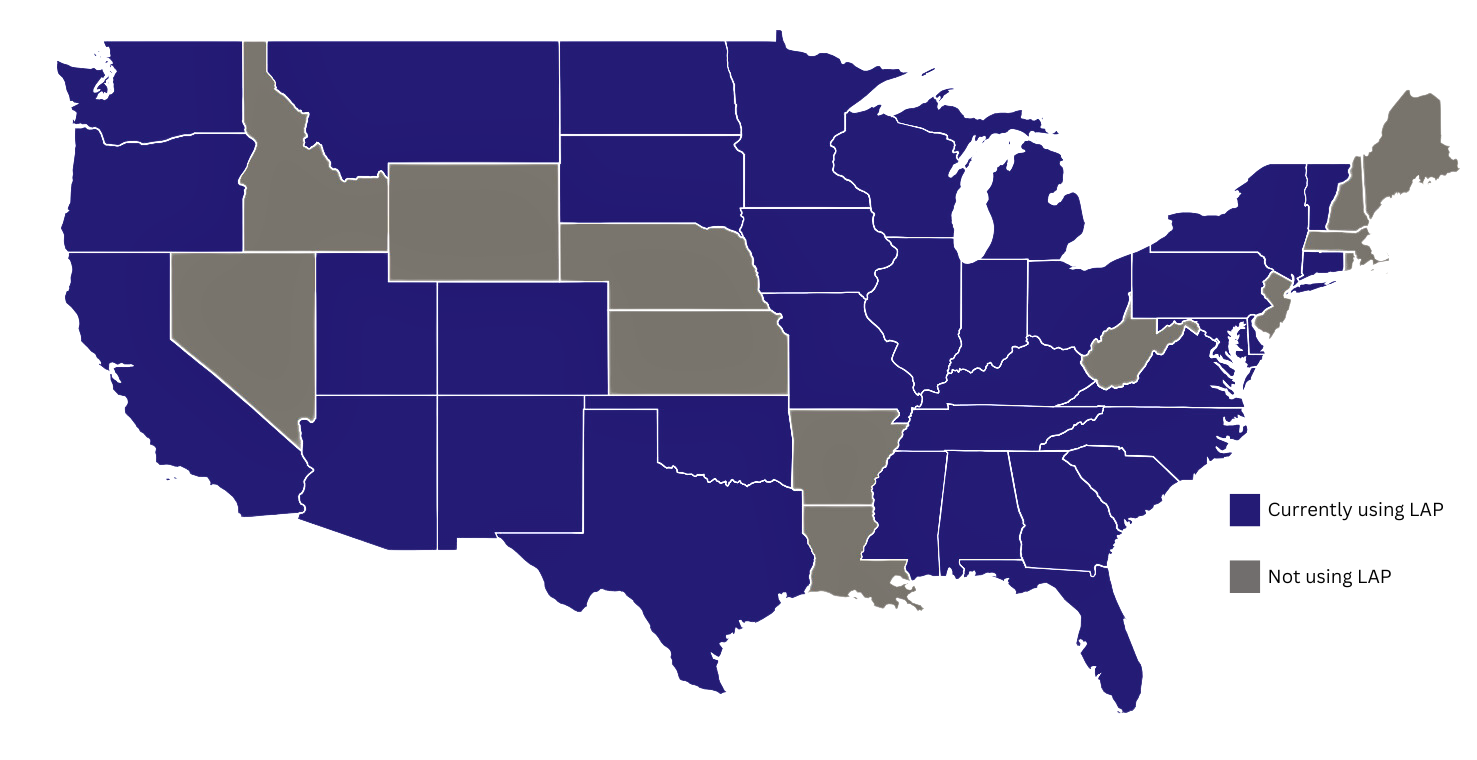
Counties in NC using LAP:
Mecklenburg
Wake
Durham
Alamance
Davidson
Buncombe
On-Site Advocates

Advocates available within law enforcement and hospital systems.
We support both the survivor and the provider.
By establishing offices within law enforcement agencies and hospitals, advocates can deliver immediate on-site in-person assistance, guiding individuals in locating resources and navigating complex systems to secure safety and justice for themselves and their families. Whether you seek someone to listen, require information, or need help accessing various services, our advocates are trained and dedicated to assisting those impacted by abuse or violence through every phase of the process.
Model
LAP 2.0:
Lethality Assessment Program Maryland Model
Lethality: A person’s risk of being killed due to intimate partner violence.
LAP 2.0 is a validated, evidence-based tool designed to evaluate the risk of lethality (DV Homicide).

Officers ask the LAP’s 11 questions at every domestic violence call.
First responders and advocates work to coordinate and communicate to engage victims who otherwise may not access life-saving services.
When a victim scores “High-Lethality”, officers are automatically referred to our hotline.
Tool
Forseti
H.A.R.T.
(Honest Assessment Response Tool™)
Streamlines access to resources.
Provides safety planning resources on-scene.
Facilitates connections between users and community services.
Collects and integrates data from calls into a centralized platform.
Allows providers to access information instantly.
Frequently Asked Questions
Forseti
-
HART™ (Honest Assessment Response Tool
DomesticViolence Lethality Assessment Module
Homeless Assessment Module
Animal Assessment Module
Field Arrest Module.
DV Supplemental Module
Analytics Platform.
Referral and Alert System.
Audit Logs.
All Modules can function as a stand alone or can be conducted simultaneously.
A Field Arrest can launch into a Homeless Assessment which could launch into a Domesc Violence Assessment.
-
The database is hosted on the AWS (Amazon Web Services) Government Cloud, the most secure and widely used data platforms for government agencies.
AWS Government Cloud is FBI Certified
Forseti has been SOC 2 Type II Audited
-
Data sharing is based strictly on established MOUs (Memorandums of Understanding) between agencies.
Data can be shared in redacted manner whereby all personally identifiable, or CORI (Criminal Offender Record Informaon) data is redacted PRIOR to being shared.
There is also a “Consent to Share” question in our assessment modules that prevents data sharing should the respondent not wish to do so.
Data sharing is established on the back end and requires no manual processes, avoiding human error.
Data can be shared to internal or external organizations. (Within or between the criminal/social justice systems).
-
Referrals can be sent either while on scene OR after completion of a module. Referrals can be sent to multiple different providers.
If a provider does not answer the initial phone call, the user can continue to call additional providers.
If a call is made at 3am and NO providers answer, the data being gathered can be shared (via our secure back-end data sharing) to the provider through our Web Portal.
The Service Provider will receive an email notification prompting them to login to the Web Portal to access the information.
-
Forseti and AWS meet all the NIBRS (National Incident-Based Reporting) and CJIS (Criminal Justice Information Services) compliance requirements.
LAP
-
NCDOJ provides a train-the-trainer instruction and TA on how to implement LAP 2.0 to community-based domestic violence service programs (DVSPs), Law Enforcement, and their partnering agencies.
-
When the victim chooses to speak with the hotline advocate. The advocate conducts a brief (no more than 10 minutes), structured conversation with the victim to safety-plan for the next 24 hours. Depending on the courses of action discussed in the telephone conversation between the victim and advocate, the first responder may work with the advocate and victim to assist in the victim’s safety-plan (e.g., transporting the victim to shelter, or to a precinct to take out an emergency restraining order).
-
When the victim chooses not to speak with the hotline advocate. The officer still calls the hotline, offers once again for the victim to speak to the advocate, and if the victim declines a second time, the advocate safety plans with the victim through the officer. The officer reviews the factors that are predictive of homicide so the victim can be on the lookout for them, encourages the victim to contact the DVSP, and may follow other protocol measures to address the victim’s safety and well-being.